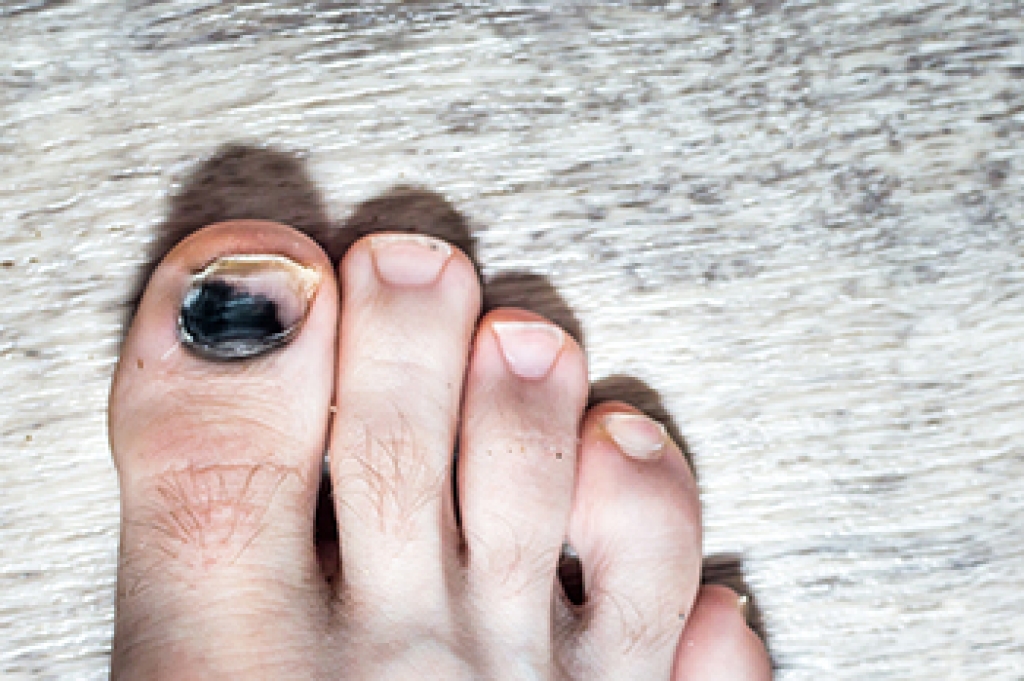
Black toenails are common in runners, usually resulting from repeated trauma to a toenail inside the shoe. While running, the toes strike the front or roof of the toe box, especially on downhill routes or long distances. This can cause bleeding beneath the nail, called a subungual hematoma. The dried blood produces a dark red or black appearance and may loosen the nail over time. Improper shoe length or width, excessive movement within the shoe, and swelling from heat or high-mileage add to pressure on the nail plate. Certain toes, particularly the big and second toes, absorb the greatest impact. Less common causes include chronic ingrown nails, fungal infection, toe deformities, or rarely tumors that also create discoloration. A podiatrist can evaluate the nail bed, relieve pressure, and guide a safe return to running while preventing nail deformity. If you notice unusual coloration in the toenails, it is suggested that you make an appointment with a podiatrist for an exam, diagnosis, and ongoing treatment.
All runners should take extra precaution when trying to avoid injury. If you have any concerns about your feet, contact Ankita Patel, DPM of All Pro Foot and Ankle. Our doctor will treat your foot and ankle needs.
How to Prevent Running Injuries
There are a lot of mistakes a runner can make prior to a workout that can induce injury. A lot of athletes tend to overstretch before running, instead of saving those workouts for a post-run routine. Deep lunges and hand-to-toe hamstring pulls should be performed after a workout instead of during a warmup. Another common mistake is jumping into an intense routine before your body is physically prepared for it. You should try to ease your way into long-distance running instead of forcing yourself to rush into it.
More Tips for Preventing Injury
- Incorporate Strength Training into Workouts - This will help improve the body’s overall athleticism
- Improve and Maintain Your Flexibility – Stretching everyday will help improve overall performance
- “Warm Up” Before Running and “Cool Down” Afterward – A warm up of 5-10 minutes helps get rid of lactic acid in the muscles and prevents delayed muscle soreness
- Cross-Training is Crucial
- Wear Proper Running Shoes
- Have a Formal Gait Analysis – Poor biomechanics can easily cause injury
If you have any questions, please feel free to contact our office located in Swedesboro, NJ . We offer the newest diagnostic and treatment technologies for all your foot care needs.

